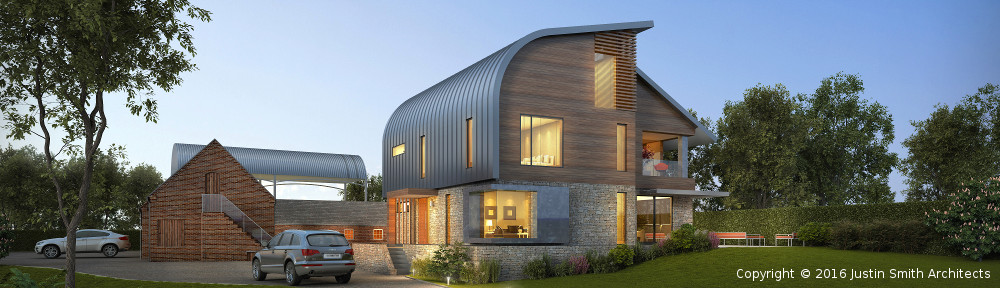
Justin and his team haven’t designed a certified Passivhaus before. I knew that from the outset and decided it was best to go with their local practice, bringing in additional Passivhaus-specific consultancy expertise as required, than to use a more distant practice that had greater Passivhaus experience.
On the basis that it’s better (and much cheaper) to make any major design changes sooner rather than later we decided to have the concept design run through the Passivhaus Planning Package (PHPP) before finalising it for the planning application.
The BRE’s Passivhaus Primer: Designer’s Guide provides high-level guidelines and from that and from my existing knowledge I was pretty sure we weren’t far off (good orientation, good (compact) building form, lots of windows on the south side and relatively few on the north side etc.) so my main concern was over the cost implications of things like the triple-glazed windows in order to offset any less-than-ideal design features.
Justin’s team did some research into which Certified Passivhaus Designers might be best placed to assist and from their shortlist I decided to engage Alan Budden and his team from Eco Design Consultants in Milton Keynes.
The first run through PHPP showed that the overall design was looking good with just one cause for concern – a prediction of too many instances of summertime overheating. This was addressed with a small reduction in the area of the south-facing windows and the addition of some additional shading on the south and west elevations.
The second run through PHPP showed the concept design meeting all of the Passivhaus criteria with some scope for further tweaks to further reduce the risk of overheating on hot days.