Passivhaus Cat Flap

I’m much more of a cat person than a dog person and some provision needs to be made for cats in the new development. Passivhaus and cat flaps are generally incompatible – more due to the air tightness requirements than the thermal insulation – so initially I was thinking the cats would be accommodated in the outbuildings rather than in the main house. However, since there will be no outbuildings for a while I need to think again.

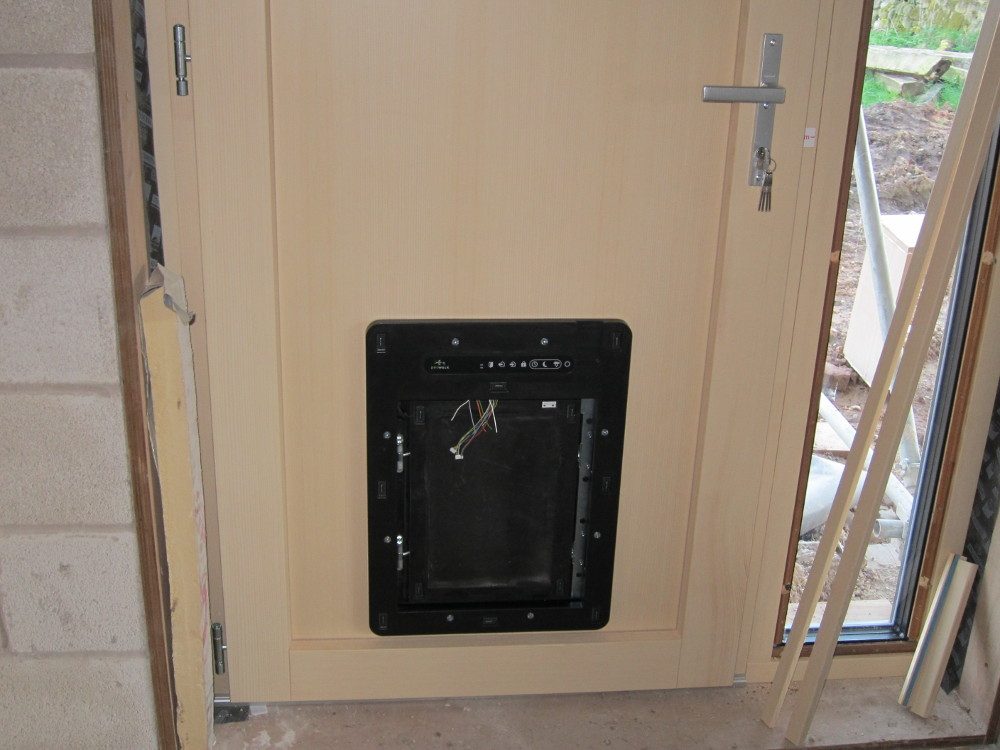
Fortunately there is a solution in the form of the Pet Walk pet door. It’s very expensive but it has clearly been designed with Passivhaus applications in mind. (It’s from Austria, home of a surprisingly large number of Passivhaus components.) In particular:

  • It passes the standard air tightness tests and performs as well as any other door or window
  • It’s very well insulated as standard with extra insulation (for the frame) available as an option
    • The advice from my Certified Passivhaus Designer is that it’s not necessary to model it separately since it performs as well as whatever wall or door it is installed in
  • It opens automatically (via a motor drive) in response to motion detectors and / or RFID chips
  • It locks securely and can be integrated into an intruder alarm system
Pet Walk pet door, http://www.petwalk.at/

Pet Walk pet door, http://www.petwalk.at/

Plan A was to install it in one of the walls, but with the walls being so thick (250mm cavity plus 2 x 100mm concrete blocks) that would require quite a long and wide “tunnel”, so Plan B is to install it in the side door. It would have been ideal if it would have fitted in the fixed side-light by the door but that is too narrow so it needs to go into the door itself. In some ways that will complicate matters, especially with respect to the 24V DC power supply, but a simple “door loop” can take care of that, as well as the integration into the alarm system.

One good feature is the wide range of clip-on covers that can make the inside and outside blend in with a variety of colours and surface finishes. They’re available in the same colours as the Internorm doors.

Update 2016-03-20: I have now purchased this cat flap in advance of it being fitted by the door installers. I’m not going to use the supplied plug-in power supply but instead hard-wire it using a separate 24V DC power supply and door loop. The supplied plug-in unit is rated 24V 1.0A so I am going to use a Mean Well DR-30-24 which mounts on a DIN rail and is rated 24V 1.5A.

The instructions say to cut off the supplied DC line socket when using a hard-wired power supply but I prefer to connect using a DC line plug (especially since I have several available). The correct size is: 5.5mm diameter with a 2.5mm pin and roughly 11mm long. The centre pin is positive.

Windows and SIPs Roof Structure Ordered

With about a month to go before work starts on site it makes sense to order the items with the longest lead times so they don’t hold up the build schedule later. In particular:

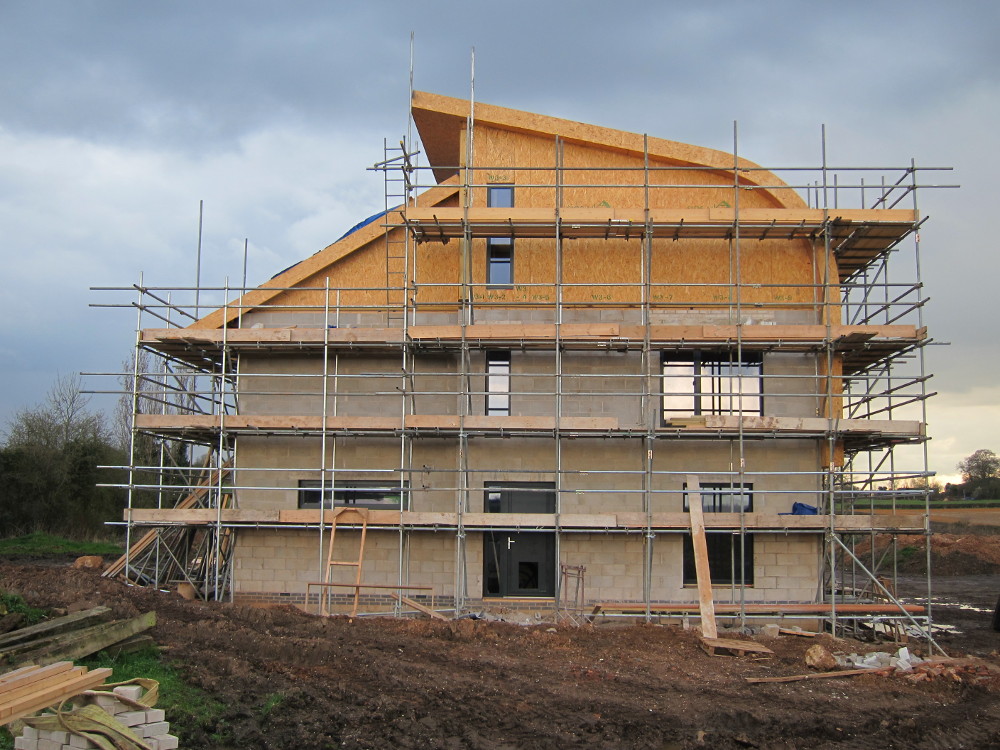
  • The SIPs structure for the second floor walls and the roof, which needs to be ready to go on as soon as the cavity walls are up to second floor level. Since this is being contracted as a design/make package with the supplier (Sips UK) the detailed design work also needs to be completed soon in order that the thermal performance can be checked in PHPP and so that the load-bearing assumptions for the masonry structure can be confirmed.
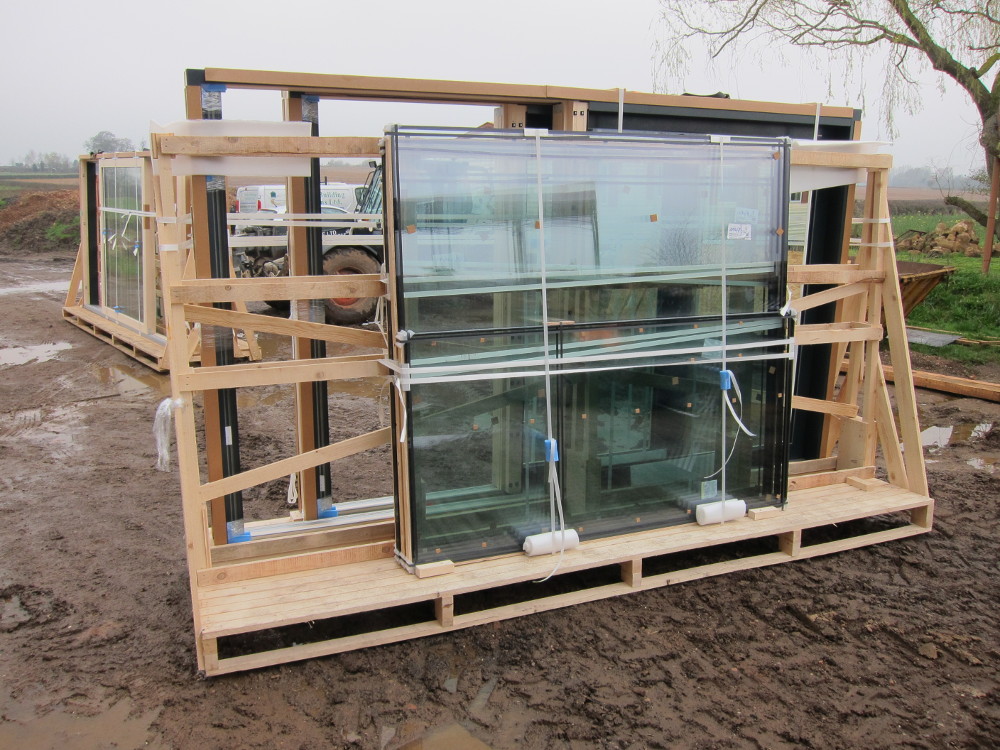
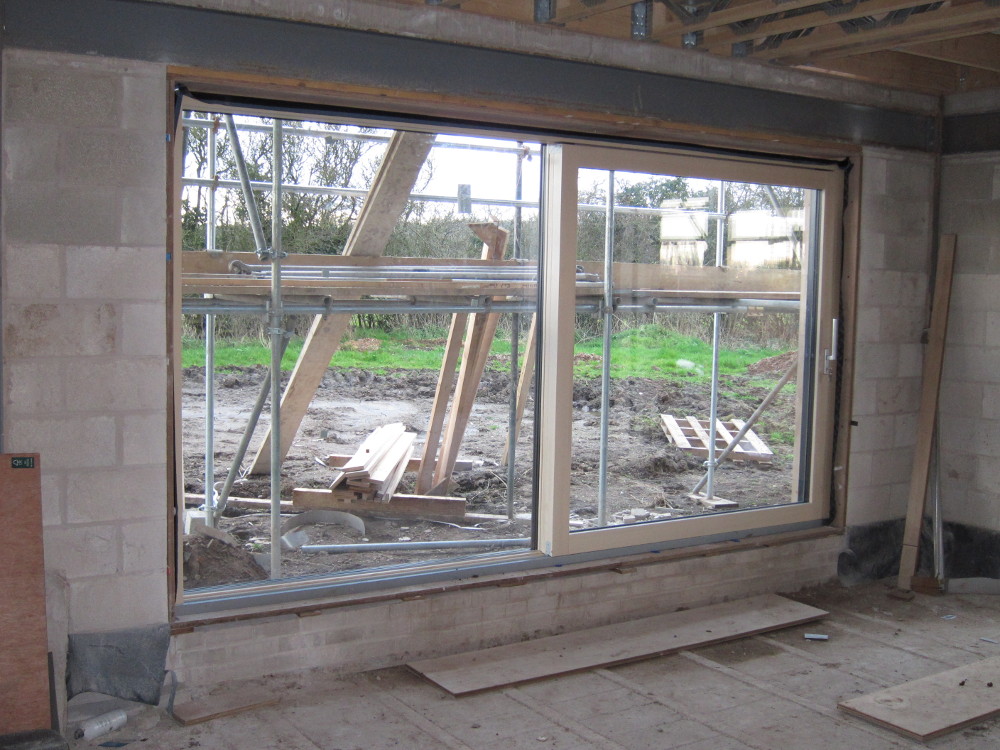
  • The windows and external doors, which have a 10 – 14 week lead time once all the dimensions and specifications have been confirmed. I’ve settled on using windows and doors from Europe’s leading Passivhaus-certified window manufacturer Internorm, located in Austria, supplied and installed by their leading UK distributor ecoHaus Internorm who are based near Stroud in Gloucestershire. While the Internorm windows are not cheap, I’ve looked at a few alternatives and I’m happy they represent the best value for money – both the build quality and the performance are excellent.

Placing orders for these sort of items means paying a substantial deposit. As with most of the building work, these sub-contracts are being managed via my main contractor. Since we’re not quite ready to sign the main building contract these initial orders have been covered under a Letter of Intent which will get subsumed into the main contract once that is signed.