
The vast majority of the window blinds are roller blinds with mains motors wired back to MDT blind and shutter actuators using 4-core cables (Live for Up; Live for Down; Neutral; Earth).
The exception is the blind for the large West-facing window in the office, which is trapezoidal (with a sloping top) so the only practical option is a Vertical blind with slats of different lengths.
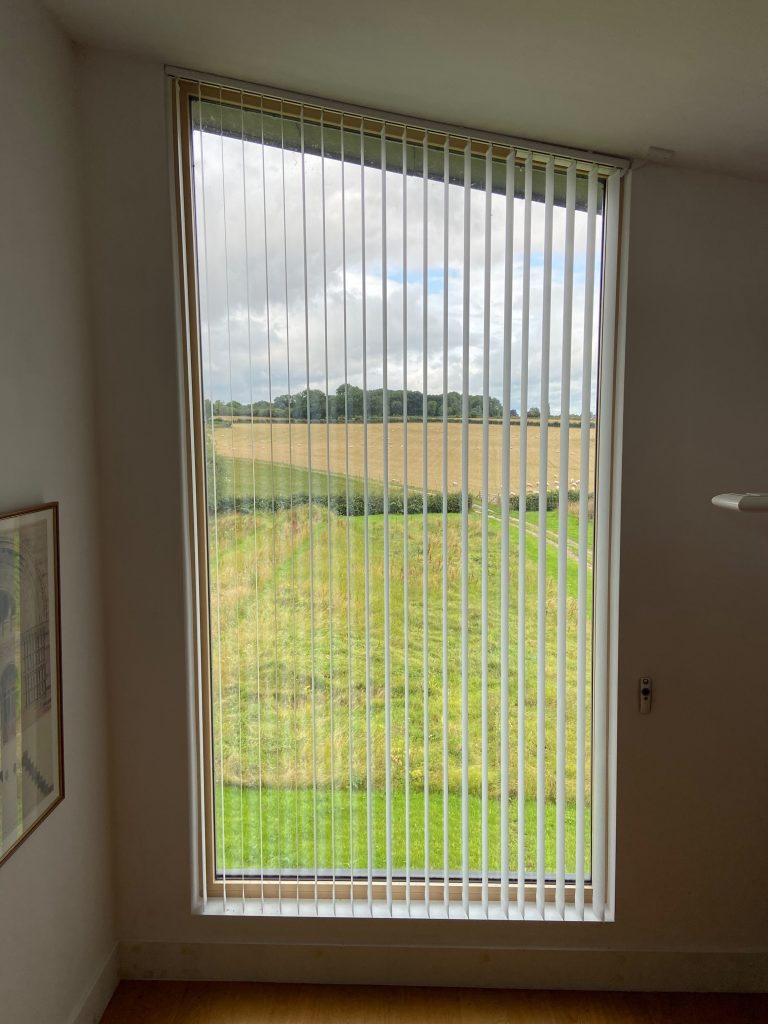
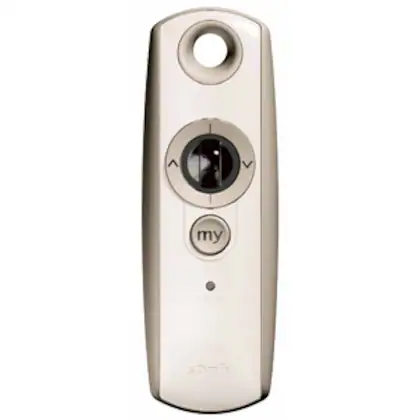
Good hard-wired control options for this sort of blind proved elusive so it’s got a permanent live mains feed and uses the Somfy RTS system for control. Manual control works very well using the battery powered Somfy Telis 1 Mod/`Var RTS Pure remote control handset, which provides options for:
- ‘Up’ (fully open, with the slats retracted) using the ^ button
- ‘Down’ (fully closed, with the slats closed)
- ‘my’ (which has been configured to the ‘slats across the window but open’ configuration – as shown in the photo above)
- Fine adjustment of the angle of the slats using the black ‘scroll wheel’
So manual control is all good; the challenge is automated control from openHAB or a similar home automation control hub.
What’s been working well for years is integration via an RFXcom RFXtrx433E-USB-43392MHz-Transceiver which is managed via the openHAB RFXCOM binding – with just a slight niggle that Open means ‘all the way open, with the slats retracted’ and Closed means ‘all the way closed’. The ideal would be having some way to automate moving to and from the “my” position – so that the slats always remain across the window and only the angle of the slats changes. On the rare occasion of needing the slats retracted to the ‘parking’ position on the left of the window, that can be done with the manual control.
I had been thinking it would necessary to configure a Dimmer-type controller rather than a Switch-type controller, which I’d tried a few times but never got to work. Then I spotted this post on the openHAB forum which explains that the RTS handset uses a custom protocol for the scroll-wheel interaction and using the standard protocol via the RFXcom transceiver there’s no way to say things like ‘close the blinds to 50%:
https://community.openhab.org/t/venetian-blinds-with-somfy-lift-tilt-25-only-no-tilt/43672/2
However, that same forum post highlights it is possible to say ‘go to the “my” position’ by having openHAB send the STOP command rather than the UP or DOWN commands.
In the end it was simply a question of changing “UP” to “STOP” in the rule that opens the Home Office blinds at sunrise (the roller blinds (_01 and _02) still need the “UP” but the vertical blind (_03) gets a “STOP”.
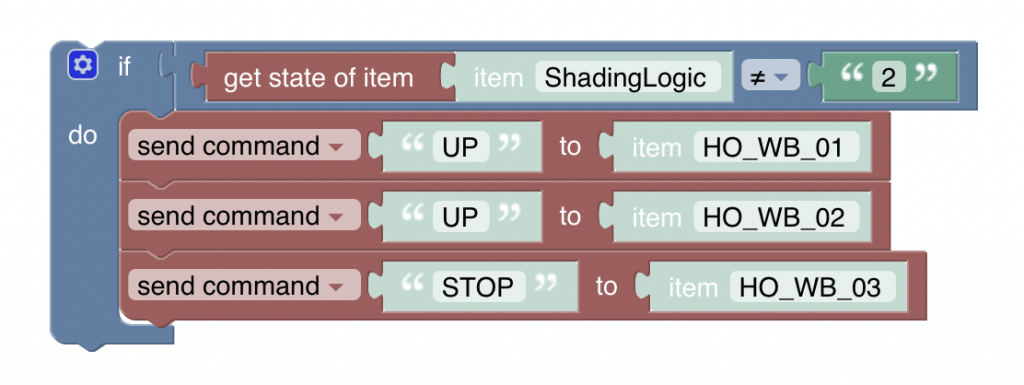
(The check for ShadlingLogic <> 2 is so the blinds stay closed when the Shading is set to “Maximum”, where the blinds stay closed all day.)